The aircraft behind
Flight Ops.
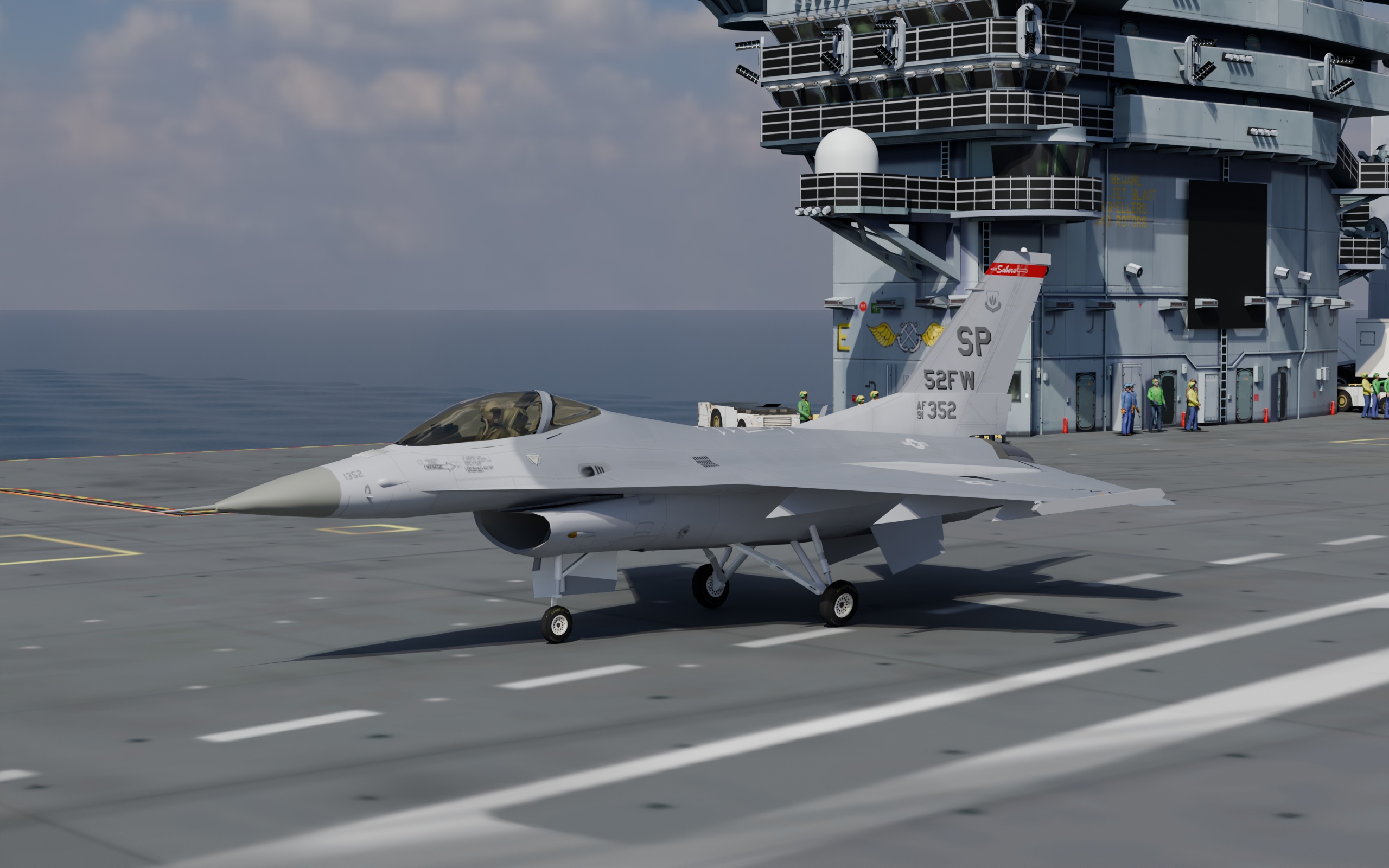
The F-16 is adapted from the detailed FlightGear F-16 Fighting Falcon, with the 91-0352 Block 50 livery. The exterior mesh, UV maps, cockpit, pilot, ejection seat and engine nozzle come from that project.
Aircraft authors & source
Copyright © 2023 Erik Hofman and the FlightGear F-16 contributors. The aircraft assets and model adaptations are distributed under GNU GPL version 2 or later. Original copyright notice.
The source archive includes the original AC3D meshes, textures, animation definitions, authors and license, a pinned source manifest, the Blender conversion script, the browser material/animation adaptation, and the refined editable Blender aircraft, canopy refinement and ambient-occlusion bake scripts, and the portable Cycles render script. Upstream revision: ef4f192f06243cf4061c2be794511db0576ac2f9.
Browser adaptation by Limestone Games, October 2026: AC3D-to-GLB conversion, aligned F110 nozzle, selected livery, reduced oversized pilot textures, animated landing gear, control surfaces and arresting hook, a smoother optical canopy, baked airframe occlusion, weathered PBR paint, angle-dependent canopy reflections, damage deformation/scorching and an engine exhaust effect. Updated October 2026 with force-based flight, moving-deck integration, impact-dependent wing separation and sampled audio; runtime sources are included in the source archive.
The F-22A Raptor
Adapted from the FlightGear F-22A Raptor, with aircraft geometry by Pigs, FGUK and contributors, cockpit work by Silver-Snail, Phoenix, POLSKY1 and contributors, and subsequent refinements listed in the original credits. Distributed under GNU GPL version 2. Pinned source and output hashes.
The browser version uses original gray camouflage, panel markings, gold canopy materials and live display artwork. Upstream raster textures and audio are excluded. The adapter retains separate stabilators, rudders, ailerons, flaps, leading edges, gear doors and vectoring exhaust petals. The source archive includes the exact geometry inputs, converter, editable Blender project, runtime and LOD build recipes.
The T-38 Talon
Mission 01 uses the detailed Northrop T-38 Talon by Emmanuel Baranger and FlightGear contributors, from the official FlightGear aircraft mirror. The original author notice records updates through September 24, 2026. Distributed under GNU GPL version 2. Original author notice and pinned source manifest.
Browser adaptation by Limestone Games, October 2026: AC3D-to-GLB conversion, training livery, duplicate cockpit instrument cleanup, original instrument scale/hinge data, 112 live instrument rotations, original gear/door sequencing and control surfaces, baked ambient occlusion, PBR normal/paint/glass finishes, separate twin-engine exhaust effects, damage separation and trainer-specific flight integration. The archive includes the original editable AC3D sources, textures, XML, conversion and bake scripts, and runtime adaptations.
Both aircraft share the October 2026 presentation pass: calibrated material finishes, wheel hubs and hydraulic detail, moving wheel/suspension rigs, local reflection probes, ground contacts, exhaust shimmer and three parked-model detail levels. Corresponding source archives include the common LOD builder, per-aircraft manifests, output hashes and build contract and future-aircraft checklist.
The trainer engine sample comes from David Culp's FlightGear T38 package, revision 22ef0585687a963b6635d7881e827ef89cc94a4b, GPL. Original README and credits. The WAV is unmodified, with its source path and hash in the audio manifest.
Aircraft sound
The engine, cockpit, hydraulic, touchdown, impact and warning recordings come from the same pinned FlightGear F-16 project, under GPL version 2 or later. Sound contributors include Carsten Brueggmann (GEED), J. Maverick and FGUK; see the complete authors list and copyright notice. The shipped WAV files are unmodified source recordings. Their original paths, hashes and formats are listed in the audio source manifest.
Runtime adaptation includes seamless looping, equal-power engine crossfades, directional exterior exhaust placed at each aircraft's nozzles and a separate cockpit mix. Wind is procedural. Short radio calls use browser speech synthesis.
Hercules / Mission 03
The legacy four-blade Hercules airframe, cockpit, propellers and authored animation data come from Emmanuel Baranger and the FlightGear C130 contributors, with original textures by Didier Fabert. The classic C-130T Fat Albert livery is Brett Harrison’s 2010 artwork, retaining its 164763 markings. This is the historical four-blade transport configuration, not the newer C-130J.
Source: official FlightGear aircraft archive, GNU GPL version 2 or later. License, original authors and livery credits and pinned source and shipped-file hashes. The conversion refines curved skins while retaining windshield corners, adds exhaust bores, fasteners, cargo details, AC-130-style external fittings and military gray artwork, and exports the original sequenced gear/control rig. Military fittings are hidden on Fat Albert. Propeller and turbine audio are the original C130 package samples.
Both selectable configurations use the shared, gameplay-calibrated Hercules flight profile. The model is 97 ft 9 in long, 132 ft 7 in across and 39 ft 2 in high, referenced against the USAF AC-130U fact sheet. It is not an engineering-validated reproduction of every variant-specific subsystem.
The carrier
The ship is the USS Harry S. Truman (CVN-75) from the FlightGear base package, licensed under GNU GPL version 2. Original work by Karla, with contributions credited to Vivian Meazza, Alexis Bory, Michael Habarta and Thorsten Renk. Full credits and conversion changes.
The converted ship retains its original deck markings, island, equipment and crew. Elevators are raised and their safety rails lowered for flight operations. The game’s catapult path, angled landing lane, arresting wires and deck collision outline are derived from this model.
Environment & renderer
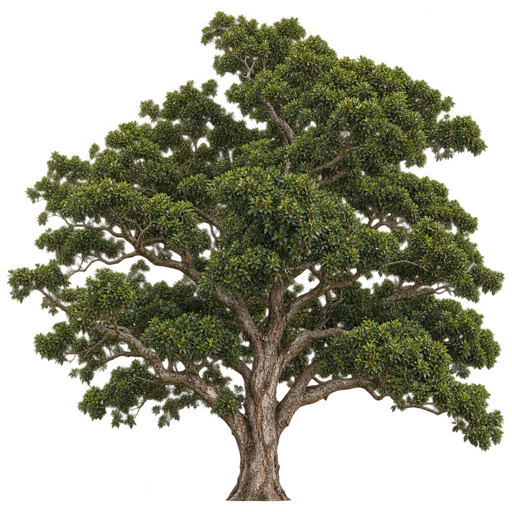
- Talon Island terrain, coastline, harbor, lighthouse, and village: original procedural scenery. Coastal tree sprite: generated with OpenAI image generation, then optimized for instanced woodland. Generation prompt and asset notes.
- Talon Field ground: Aerial Grass Rock, Rob Tuytel, Poly Haven, CC0. Hangar cladding: Corrugated Iron, Dimitrios Savva and Jenelle van Heerden, Poly Haven, CC0. Original files, URLs and hashes. Apron: Concrete Floor Worn 001, Dimitrios Savva and Rico Cilliers, Poly Haven, CC0. Airbase geometry, vehicles and ground equipment created for this game.
- Download sky HDRI and photographic background: Kloofendal 48d Partly Cloudy Pure Sky, Poly Haven. CC0.
- Deck detail maps: Asphalt 01, Charlotte Baglioni and Dario Barresi, Poly Haven. CC0. Adapted as 1K color, normal and roughness textures. Download original 2K maps and source manifest.
- Three.js r128, its loaders, reflective water, water normal texture, SSAO and FXAA. MIT license.
- Interface, arcade flight model, scene integration and audio mixing: created for this game.
- Rendered still: Blender Cycles, using the same aircraft and carrier sources with separate lighting and deck materials. To reproduce it, unpack both source archives and follow the aircraft source README.
Raptor sound design and original finish
The Raptor uses original cockpit/finish artwork and cavity shading. Its designed intake, exhaust, reheat and cockpit layers derive from the credited FlightGear GEED recordings by Carsten Brueggmann, Erik Hofman and contributors (GPL-2.0-or-later); they are not F119 recordings. Sound sources and hashes. The Raptor source package includes the inputs and reproducible recipe.